

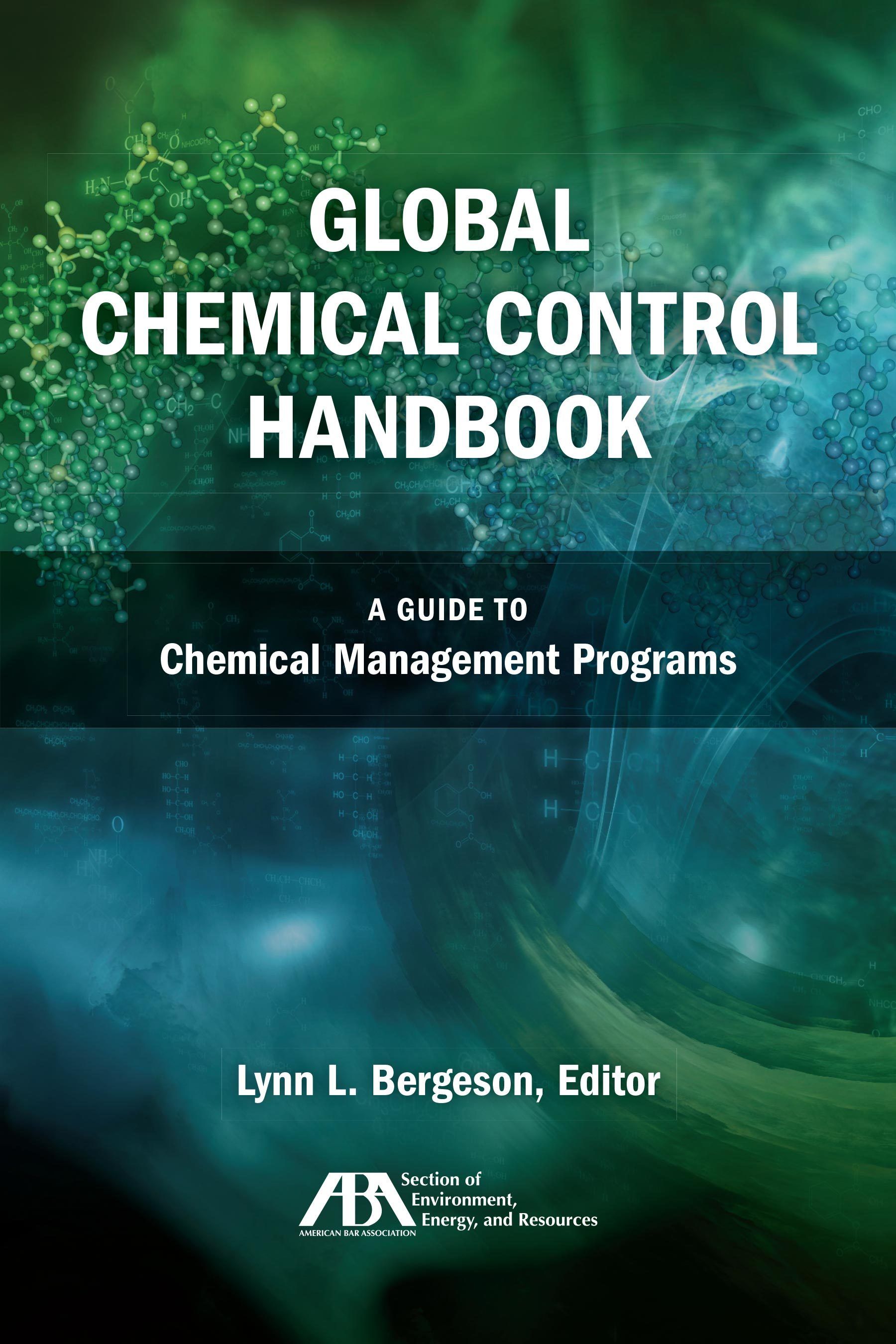
Global Chemical Control Handbook: A Guide to Chemical Management Programs
The business of chemicals is being impacted by measures being taken by governments as well as industry stakeholders to improve all aspects of chemical management, from production and processing to distribution, use, and disposal. Governments across the globe are increasingly aware of the need for heightened and improved management of chemicals. Along with improved management standards developed by the chemical industry, international governments have been enhancing their domestic management programs and increasing their levels of regulatory control.
Global Chemical Control Handbook keeps practitioners abreast of these important developments—what they are, on what segment of the global supply chain they apply, and when and how these measure impact the business of chemicals. Providing a broad overview of key chemical management programs in the United States, Europe, Asia, and Central and South America, this book describes the key laws and their regulatory implementation in these jurisdictions. The authors provide a basic understanding of each law and help practitioners identify key business issues of concern.
While pointing the way to further, more granular research, Global Chemical Control Handbook explains how a country’s chemical management program works, and facilitates an understanding of how the law might apply to a product line, while also helping the practitioner anticipate the transactional impact and enforcement opportunities a country’s regulatory program presents.
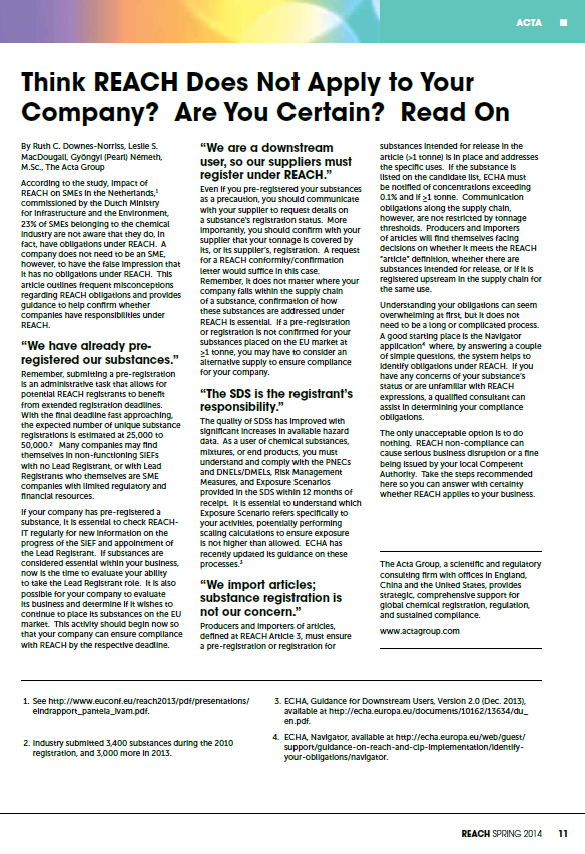
Think REACH Does Not Apply to Your Company? Are You Certain?
This article outlines frequent misconceptions regarding REACH obligations and provides guidance to help confirm whether companies have responsibilities under REACH.
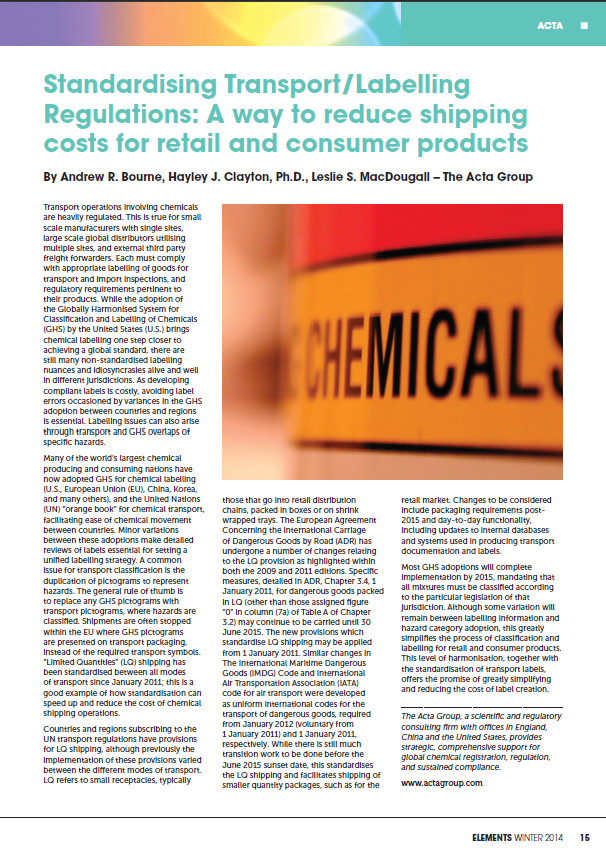
Standardising Transport/Labelling Regulations: A way to reduce shipping costs for retail and consumer products
In the context of 2014 chemical transportation, standardizing regulations, particularly through adopting the Globally Harmonized System (GHS), significantly reduces shipping costs for retail and consumer products.
This standardization cuts compliance costs by eliminating the need for varied labels across jurisdictions and improves operational efficiency by enabling better tracking and reducing errors.
Standardized, clear labeling also enhances safety, minimizes transport delays, and helps avoid regulatory fines. More information on these topics was often covered in Elements magazine, a publication by Chemicals Northwest.
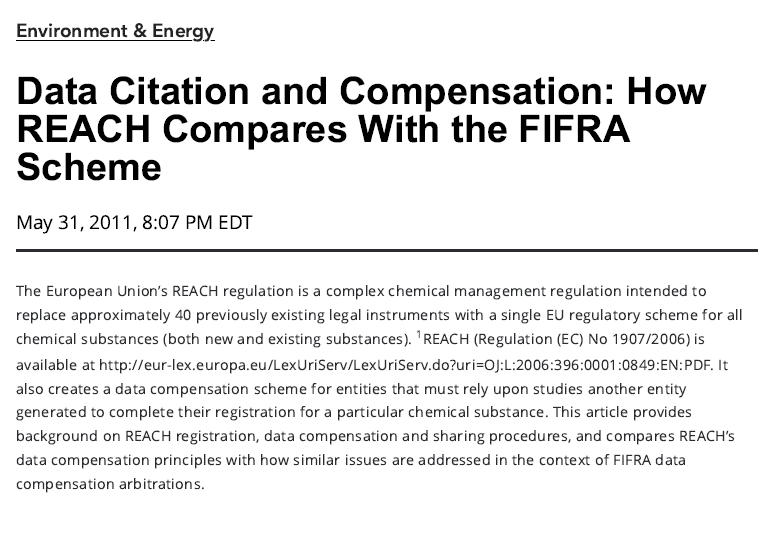
Data Citation and Compensation: How REACH Compares With the FIFRA SchemeData Citation and Compensation: How REACH Compares With the FIFRA Scheme
A comparative analysis of data citation and compensation frameworks under the EU's REACH regulation and the US Federal Insecticide, Fungicide, and Rodenticide Act (FIFRA).
Co-authored by Leslie S. MacDougall, Lisa M. Campbell, and Ruxandra Cana, this article examines structural differences between REACH's collaborative registration model and FIFRA's arbitration-centered compensation scheme for shared regulatory data. Bloomberg Law, June 2011.

Turkey Enacts REACH-Like Chemical Program: What Stakeholders Need to Know
Turkey enacted the Inventory and Control of Chemicals Regulation (Regulation) in December 2008. The Regulation is a scaled-down version of the European Union’s Registration, Evaluation, Authorization and Restriction of Chemicals (REACH) regulation and mandates the creation of a chemical inventory for manufactured and imported substances in Turkey.
For a variety of reasons, the new law is the source of considerable confusion. This article seeks to clarify several issues and to assist stakeholders in understanding the new Regulation’s application and effect.
Note: Requires paid membership
Cluster of Bell's Palsy Cases Found Among Hospital EmployeesCluster of Bell's Palsy Cases Found Among Hospital Employees
A brief epidemiological report documenting an unusual cluster of Bell's palsy cases among hospital employees. Published as correspondence in Clinical Infectious Diseases, the investigation examined potential occupational or environmental factors contributing to the facial nerve paralysis cases observed within a healthcare setting.
Note: This is published by Oxford Academic and requires institutional access or rental through DeepDyve to read the full text. The correspondence author was Dr. Mitchell I. Burken from the Department of Veterans Affairs Medical Center, Perry Point, Maryland.